
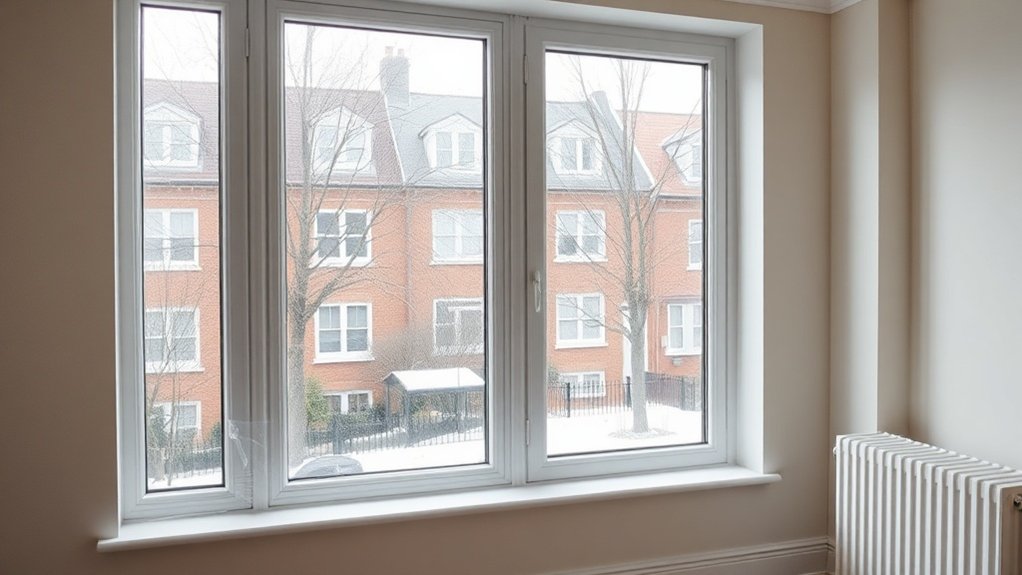
Window insulation film in White City is the quickest way to take the chill off single‑glazed or sash windows that cannot be replaced. A clear low‑E film bonded to the inside of the glass reflects room heat back into the room, raises the surface temperature of the pane, cuts condensation and blocks almost all the ultraviolet that fades furnishings, all without touching the frames. It suits listed houses, rented flats and leasehold properties where the windows must stay as they are, and this page covers the film types, costs and realistic savings.
Key insights
- Insulation film adds a thin thermal layer to existing glass, reducing heat loss and the cold‑glass draught in older White City windows at low cost.
- Low‑E films help in winter, solar control films tackle summer overheating and glare, and most block the UV that fades floors and fabrics.
- Film is applied from inside in a single visit, and the clearest products are almost invisible, so conservation areas and listed buildings are rarely a problem.
- Tenants and leaseholders usually need written consent; choose a removable, residue‑free film.
Why White City, W12 Homes Need Window Insulation Film
White City winters are mild but long and damp, energy prices remain high, and a large share of the housing is Victorian and Edwardian with single‑glazed sashes that were never designed to hold heat. Through a single pane the room loses heat by radiation as well as conduction, and the cold glass sets up a draught that you feel even with the frame sealed. Film adds a low‑cost layer that slows both, improving the energy performance of windows that cannot be changed.
Privacy is the other reason people call us. On a tight terraced street or in a basement flat, a film that keeps daylight coming in while limiting the view from the pavement is often more welcome than a blind. The combined effect is a steadier indoor temperature and less reliance on the boiler or electric heaters.
How Window Insulation Film Works on Your Windows
Insulation film is a multi‑layer polyester sheet, usually under a tenth of a millimetre thick, with a microscopic metallic or ceramic coating. On a White City window the low‑emissivity layer reflects long‑wave heat from radiators and people back into the room instead of letting it escape through the glass, and a solar control version does the reverse job in summer, bouncing infrared from the sun back outside.
Built‑in UV filters block the great majority of ultraviolet while leaving visible light largely untouched, so rooms stay bright and carpets, timber floors and artwork fade far more slowly. The pressure‑sensitive adhesive bonds the film across the entire pane, which also stiffens old glass and holds fragments together if it breaks. A hard scratch‑resistant top coat lets the film survive years of cleaning, condensation cycles and the grime of a busy White City road.
Is Window Insulation Film Right for Your Home?
Every White City, W12 property has its own problem windows, so the first step is to work out what you want the film to do. A south‑ or west‑facing room that bakes in July needs a different film from a north‑facing bay that never warms up in January, and a street‑facing ground floor that needs privacy is different again. Film is a good fit if you want:
- A quick thermal improvement to original sash or Crittall windows that must stay in place
- Lower heating or cooling demand without losing daylight or the view
- Protection for timber floors, fabrics and pictures against UV fading
- Safer glass, since film holds shards together if a pane is broken
- Less of the cold‑radiation feeling from large single panes facing a noisy road
Types of Window Film for White City Properties
For the range of glazing we see in White City, from single‑glazed Victorian sashes to modern shop fronts, there are four families of film to choose from. Low‑E thermal films cut winter heat loss and make the pane feel warmer. Solar control films reduce summer heat and glare on sunny elevations. Clear UV films protect interiors with no visible change to the façade. Safety and security films thicken the glass to meet impact or containment requirements such as BS EN 12600.
Most jobs combine two aims. A gallery or riverside flat might want low‑E with strong UV blocking; an overlooked terrace wants solar control plus privacy. For conservation areas we specify near‑invisible films, while a commercial frontage can use a ceramic or spectrally selective film with a subtle tint that still satisfies planning and brand guidelines. Spectrally selective films filter the infrared that causes overheating while keeping light transmission high, and the UV block, typically above 99 percent, is why galleries, boutiques and design studios across White City use it.
Window Film vs Double and Secondary Glazing
Deciding between film and a glazing upgrade in White City comes down to the building, the budget and how much disruption you can accept. Film improves the glass you already have; double or secondary glazing replaces or adds to the window system, which costs more and delivers more. Many houses end up using film on the front and new units at the back. Weigh up the following:
- Cost and lifetime: film is cheapest up front but has a shorter life than a sealed unit
- Disruption: film is fitted in hours from inside, with no scaffold or making good
- Performance: film trims the U‑value, while double or secondary glazing roughly halves it
- Noise: secondary glazing cuts traffic noise substantially; film barely changes it
- Appearance: a clear film is invisible on heritage glass, whereas new units can thicken sightlines
Window Film for Period and Listed Buildings
Original sashes in a Victorian terrace or a Georgian townhouse in White City are protected for good reason, and any thermal upgrade has to leave the glass, putty lines and sightlines alone. Low‑E insulation film does exactly that: it improves the U‑value and reduces the radiant chill from the glass while remaining effectively invisible from the street, which satisfies most conservation requirements. It can be applied to individual rooms or elevations where the problem is worst, avoiding the cost of secondary glazing or the planning battle of replacement windows.
Discreet Thermal Upgrades
Many White City owners accept cold rooms as the price of original windows. Thermal film gives you an alternative: a layer that performs like a light secondary glazing but sits on the glass itself, with no change to the building's character and no conflict with conservation rules.
- Cut heat loss through single glazing with a low‑E coating
- Limit solar gain on south‑facing rooms while keeping the glass clear
- Add a subtle pattern or frosting where privacy is needed
- Block UV to slow fading of fabrics, artwork and timber
- Fit from inside in one visit, with no scaffolding or redecoration
Preserving Historic Aesthetics
Period glass is part of what makes a White City house special: the slight ripple of cylinder or crown glass, slender glazing bars and hand‑applied putty. Ultra‑clear insulation films bond directly to that glass, so all of it stays exactly as it is.
Conservation officers object to visible change, and a well‑chosen spectrally selective film cannot be detected from the pavement. The film is cut back neatly to the putty line, and because it can be removed without damage it fits comfortably within listed building consent where that is needed. The UV reduction also protects historic joinery, paint pigments and textiles, and you avoid double‑glazed units that would thicken the frames and alter the proportions of the window.
DIY Window Insulation Film: Can You Do It?
Fitting insulation film yourself in White City is possible, but the question is whether you can get a clean, airtight, wrinkle‑free finish, because a bubbled or creased film looks worse than the bare glass and performs no better. The glass needs to be spotlessly clean, each pane measured to the millimetre and the film trimmed accurately around Georgian bars, sash horns and trickle vents.
A good heat‑shrink kit or a self‑adhesive low‑E film will raise the surface temperature and reduce condensation if you work slowly, squeeze out every bubble and keep the edges straight. Check that any film is compatible with existing double glazing, since some solar films can stress a sealed unit. A professional installer brings precise cutting for irregular sashes, bays and Crittall windows, adhesive that cures properly despite the humidity swings in an old house, performance figures for your own elevation and a written warranty covering adhesion, clarity and thermal performance.
How Much Can Window Film Cut Your Bills?
A well‑chosen insulation film can trim a White City, W12 home's heating and cooling costs by somewhere in the region of a tenth to a quarter, with the biggest gains where the windows are single‑glazed or the sashes leak. The saving comes from reducing both the radiant heat escaping through the glass and the conducted loss, which matters most in damp, windy White City winters and during hot spells. Prices run from a few pounds for a DIY heat‑shrink kit to a professionally fitted spectrally selective film that costs a fraction of secondary glazing, with film type, glass area, access and warranty length the main cost drivers.
In a gas‑heated house that typically means a saving of a few hundred pounds a year, depending on tariff, glazed area and orientation, with south‑ and west‑facing windows paying back fastest. Because the existing glass is kept, you avoid the embodied carbon and upheaval of replacement, and the payback period is often under five years.
How Window Film Helps With Draughts and Noise
Some rooms stay draughty and noisy even after the frames have been sealed, because in older White City housing the glass itself is the weak point. A single pane gets cold, chills the air beside it and sends that air down across the floor. A low‑E film raises the surface temperature of the glass, which cuts that downdraught, and the extra layer slightly damps the pane against vibration.
- Reduces the cold‑glass downdraught that reads as a draught
- Softens high‑frequency street noise a little, though not the low rumble of traffic
- Lasts for years thanks to multi‑layer polyester and UV‑stable coatings
- Works on existing frames, ideal for Victorian sashes and steel casements
White City Rules on Window Film for Renters and Leaseholds
Before applying any film in a White City, W12 rental or leasehold flat, read the agreement. Most tenancy agreements and leases treat adhesive film as an alteration to the glazing, so you will usually need written permission from the landlord, managing agent or freeholder first, and some blocks have rules on external appearance that cover tinted or reflective films.
Choose a removable, residue‑free film and keep the data sheet showing it can be taken off without damaging the glass or any existing coating. Keep a record of the installation and how the film is removed, and point out the lower heating demand; many landlords are happy to agree to a change that improves the EPC at no cost to them.
This page sits within our wider energy efficient glazing service for White City.
Frequently Asked Questions
Can Window Insulation Film Be Recycled or Is It General Waste in White City?
Nearly always general waste. Window film is a laminate of polyester, metal or ceramic coatings and adhesive, and that mix is not accepted in White City kerbside recycling, so old film and off‑cuts go in the residual bin. Clean, unused polyester off‑cuts without adhesive can sometimes go to a commercial plastics recycler, and some manufacturers run take‑back schemes for trade installers. Never put film in with mixed recycling where it contaminates the load.
Will Window Insulation Film Interfere With Mobile, Wi‑Fi, or Radio Signals?
Standard films do not. Clear UV, frosted and ceramic films are non‑conductive plastics and have no effect on reception. The exception is a metallised low‑E or heavily reflective solar film, where a thin conductive layer can weaken 4G, 5G and Wi‑Fi signals passing through the glass, most noticeably in a flat with film on every window. If signal matters choose a ceramic or non‑metal film, leave one pane uncoated, or add a mesh Wi‑Fi node.
Are There Hypoallergenic or Low-Voc Window Films for Sensitive Occupants?
Yes. Most quality films are polyester with a water‑based acrylic adhesive and give off very little once cured, and several manufacturers publish VOC emission test results to ISO 16000 or similar standards. For someone with asthma or chemical sensitivity, ask the installer for the safety data sheet, specify a water‑based rather than solvent adhesive, and ventilate the room well for a day or two after fitting while the slip solution dries.
How Do I Safely Remove Old Window Film Without Damaging Heritage Glass?
Go slowly and keep metal away from the glass. Lift a corner with a plastic scraper, warm the film gently with a hairdryer to soften the adhesive, and peel it back at a shallow angle in steady passes. Any residue comes off with a pH‑neutral citrus gel or warm soapy water and a microfibre cloth, tested on an edge first. On old crown or cylinder glass avoid razor blades, steam and strong solvents, which can mark the surface or loosen putty.
Summary
Window insulation film gives a White City home a warmer, better‑protected pane without changing the window itself, which makes it the practical choice for listed houses, rentals and leasehold flats. Choose the right type for the elevation, have it fitted cleanly, and single‑glazed sashes can feel close to basic double glazing for a modest outlay. Call us for a free survey and a quote for your windows.